
CIRAN’s MOOC is now available for all!
Massive Open Online Course – Mining, Critical Raw Materials, land use, and permitting in complex times: An introduction
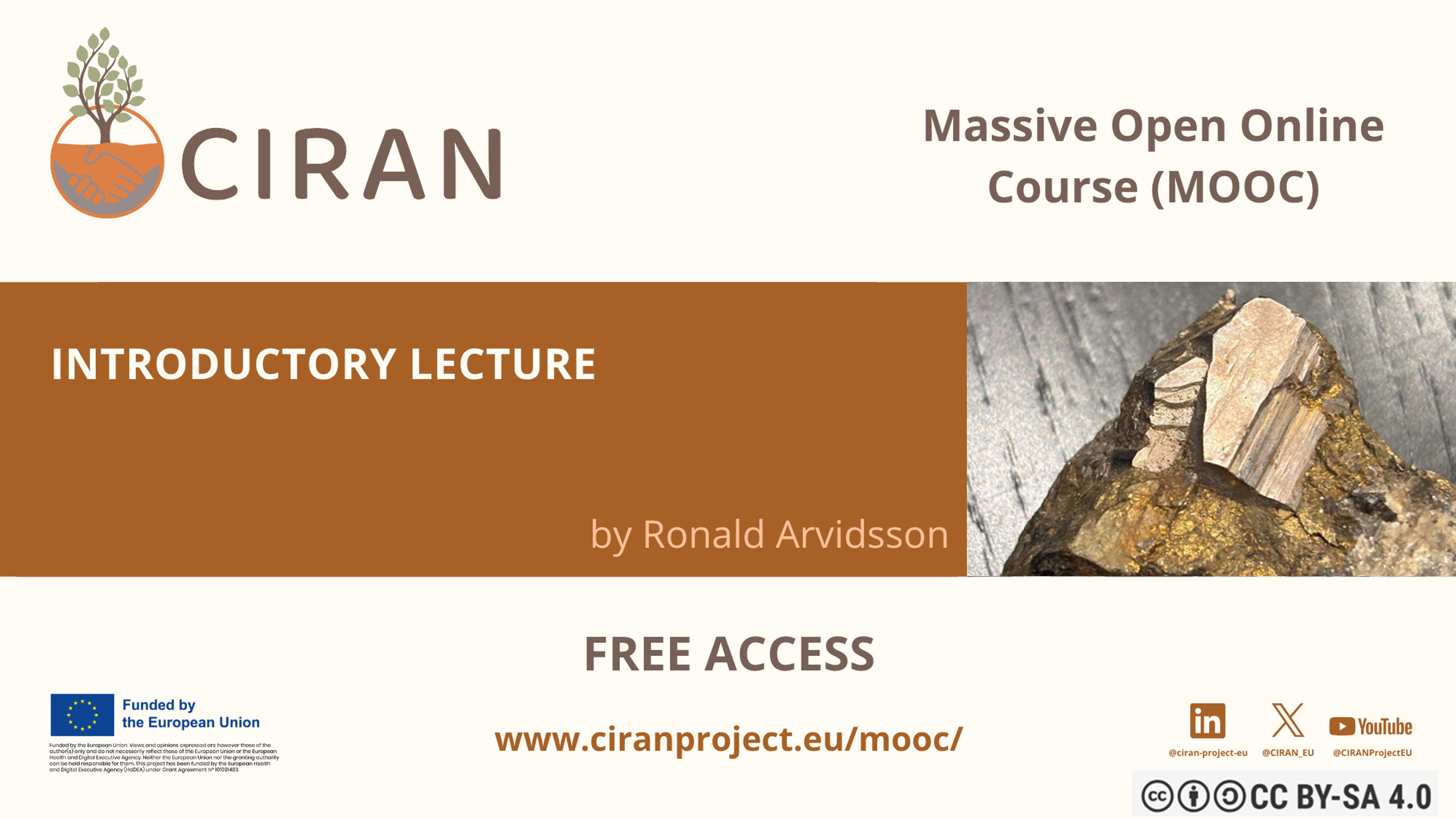
Introductory Lecture – by Ronald Arvidsson
This MOOC introduction is delivered by WP7 leader Ronald Arvidsson (Geological Survey of Sweden, SGU). Ronald Arvidsson is an Associate professor at the Department of Earth Sciences, Uppsala University, and holds a PhD in Seismology. He has been working in mining exploration and mapping, geophysical and geological sampling and modeling, the SGU’s mineral information. Has been the coordinator of different EU funded projects for the past 30 years and worked in EU research in mining policy and technological projects during the past ten years.
What will you learn in the Introductory Lecture?
- The importance and context of this MOOC
- The structure of the MOOC and the topics covered by its 9 lectures
- The target audiences of this MOOC
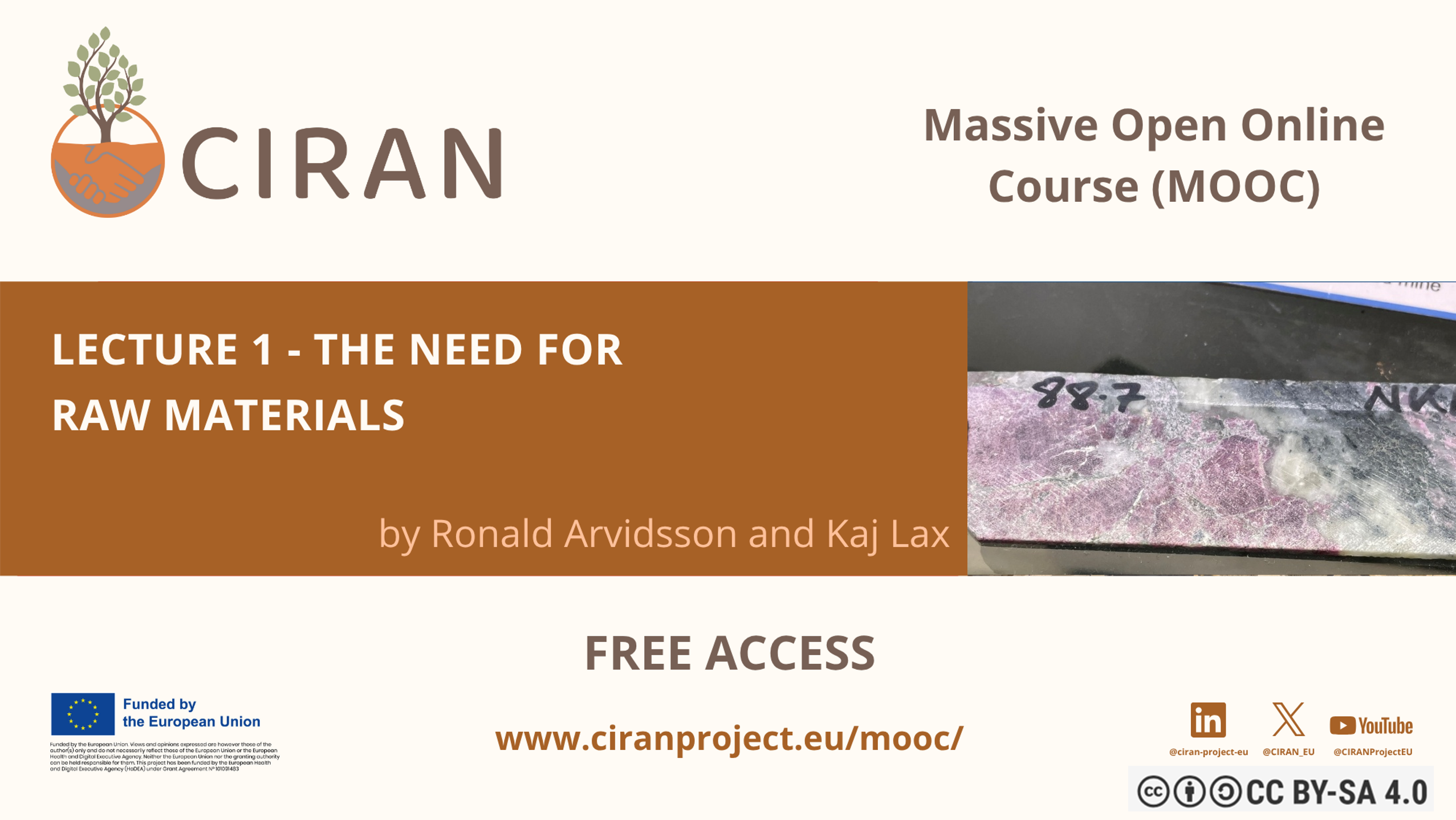
Lecture 1: The need for Raw Materials – by Ronald Arvidsson and Kaj Lax
This first lecture in the CIRAN MOOC is delivered by WP7 leader Ronald Arvidsson and Kaj Lax (Geological Survey of Sweden, SGU).
What will you learn in Lecture 1?
- Why there is a growing need for raw materials in the current context of European green and digital transitions.
- How resources are sourced through mining or recycling
- The basic concepts for permitting, and what Critical Raw Materials (CRMs) are
- The European 2024 Critical Raw Materials Act (CRMA) and why certain mineral raw materials are considered ‘critical’ according to the European Union (EU)
Click on the Lectures below to watch them on YouTube:
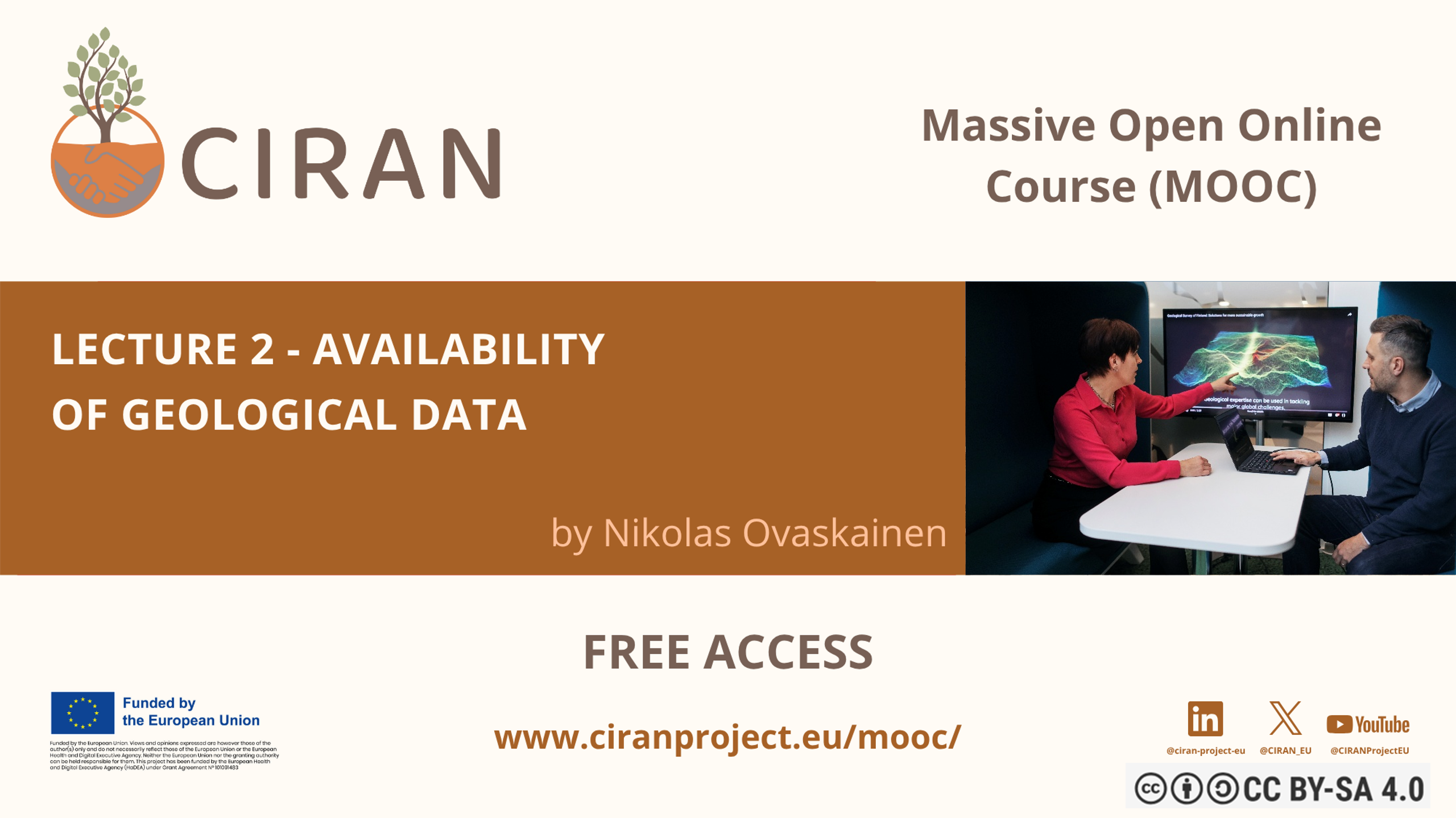
Lecture 2: Availability of geological data – by Nikolas Ovaskainen
This lecture is delivered by Nikolas Ovaskainen (Geological Survey of Finland, GTK), Research Scientist on the structural geological field focusing on on-site assessment of nuclear waste. Expert on GIS data related to protected areas and CRMs in Europe.
What will you learn in Lecture 2?
- The importance of rigorous geological data sources for land use classification
- Geological data sources
- Types of naturally protected areas in Europe
- CRM occurences in such areas
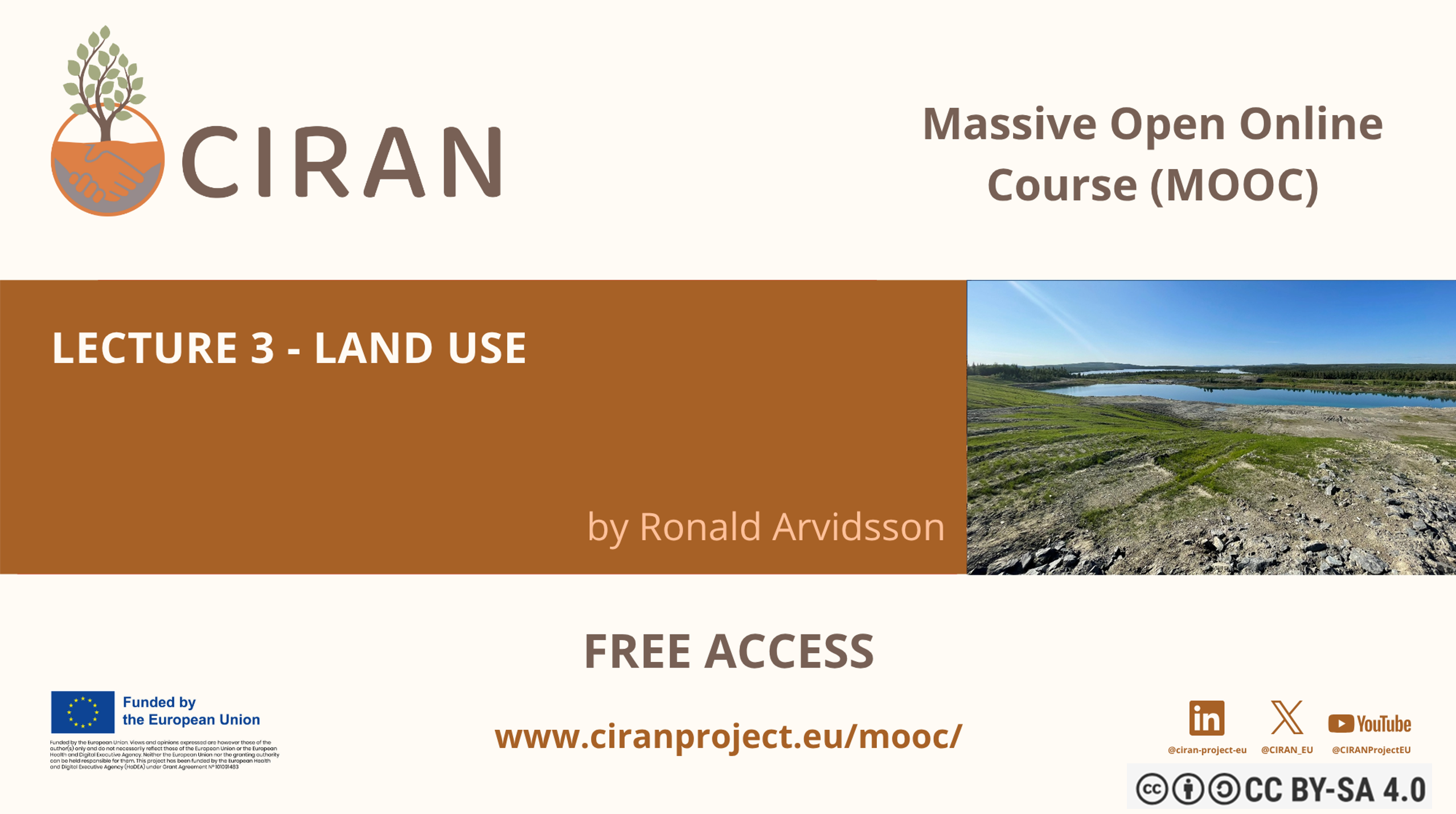
Lecture 3: Land Use – by Ronald Arvidsson
This lecture is delivered by WP7 leader Ronald Arvidsson (Geological Survey of Sweden, SGU).
What will you learn in Lecture 3?
- About land use permission processes
- Land use implications across exploration, extraction, and post-mining phases
- Instruments for determining land use
- Stakeholders involved in permitting and land use processes
- Learn about the situation in your country by taking the final quiz!
Click on the Lectures below to watch them on YouTube:
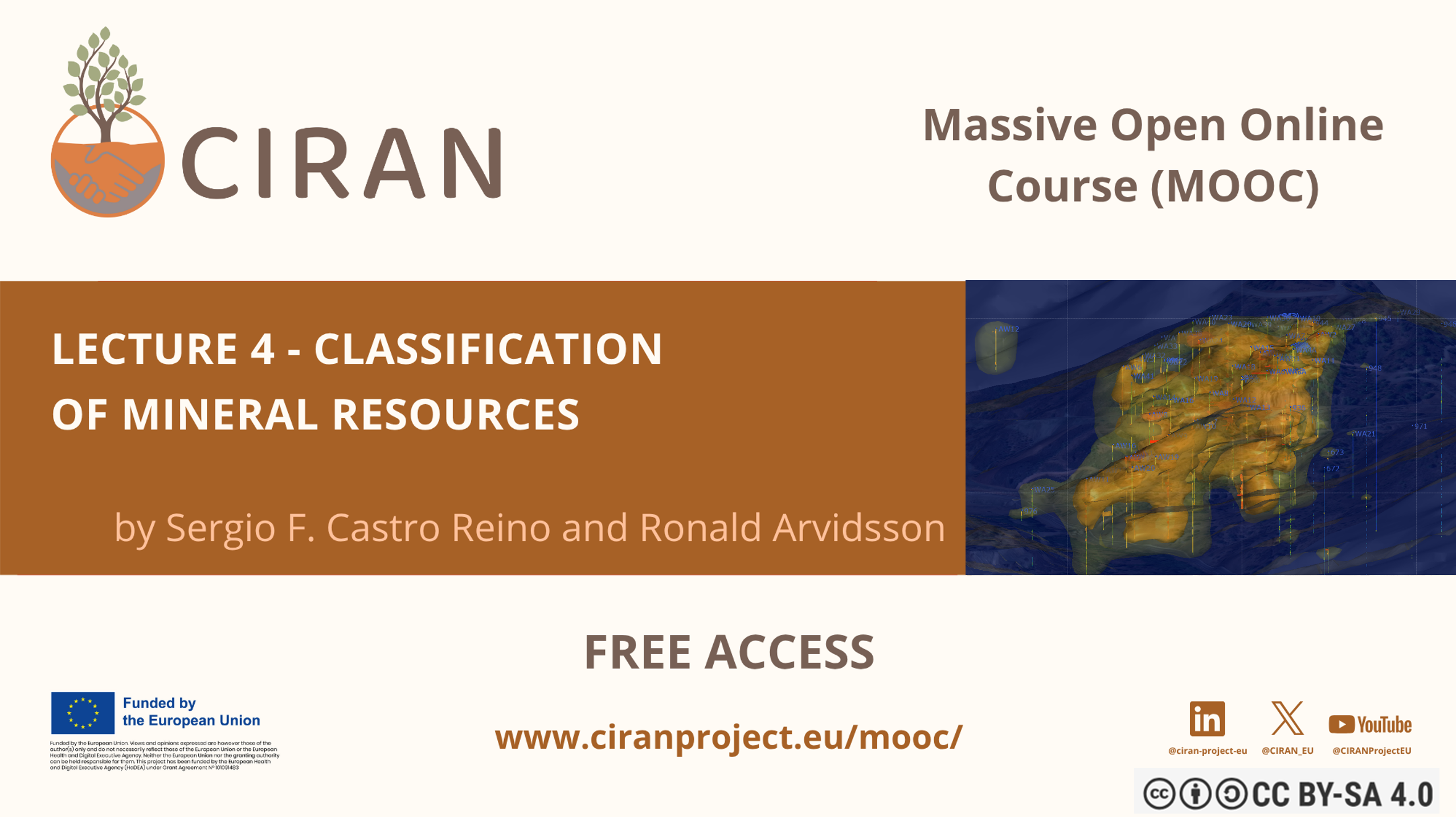
Lecture 4: Classification of mineral resources – by Sergio F. Castro Reino & Ronald Arvidsson
This lecture is delivered by Sergio Francisco Castro Reino (SGU) and Ronald Arvidsson (SGU). Dr. Castro is an exploration and mining geologist. Dr. Castro –Ph.D. in Geosciences focused on mineral deposits and geochemistry- is a Senior Geologist in Mineral Exploration, Mining and Geomechanics at SGU.
What will you learn in Lecture 4?
- Resource classification according to CRIRSCO and UNFC
- Assessment of mineral occurrences and defining mineral resources and mineral reserves
- Assessment of the geological resource (G-axis), the technical extraction feasibility assessment (F-axis), and the assessment for the environmental, socio-economic, and regulatory viability (E-axis).
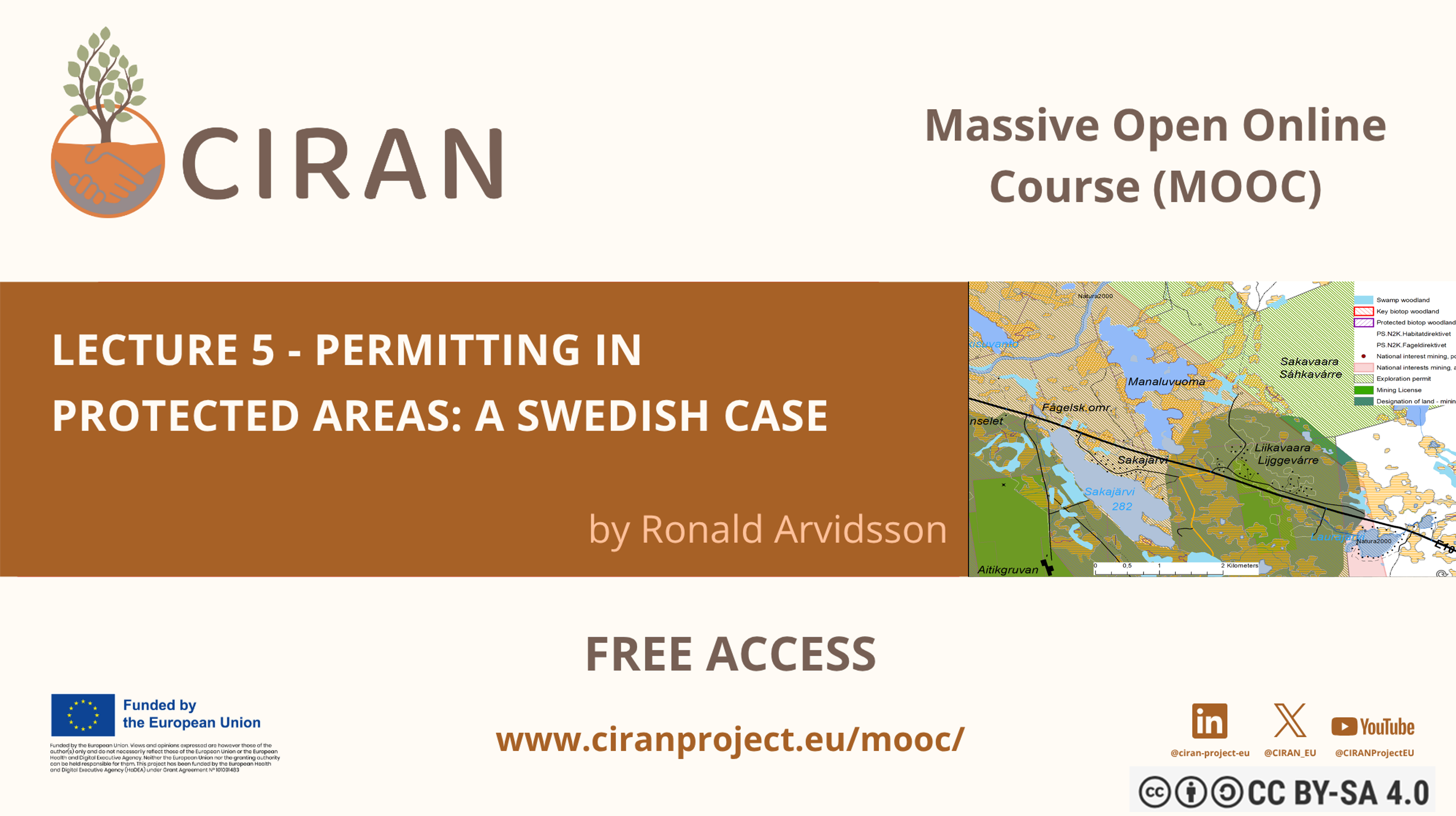
Lecture 5: Swedish Case Study – Permitting of mining projects in or near areas of protected nature – by Ronald Arvidsson
This lecture is delivered by Ronald Arvidsson (SGU).
What will you learn in Lecture 5?
- Four different exploration and mining cases in Sweden
- Strategies and processes used for mining beneath or near environmentally protected areas
- Tools and data necessary in monitoring and modelling effluents from the future mining area
- EU directives and their practical implementation’s impact on permitting
- Compensation measures for infringement of environmental protection objectives.
Click on the Lectures below to watch them on YouTube:
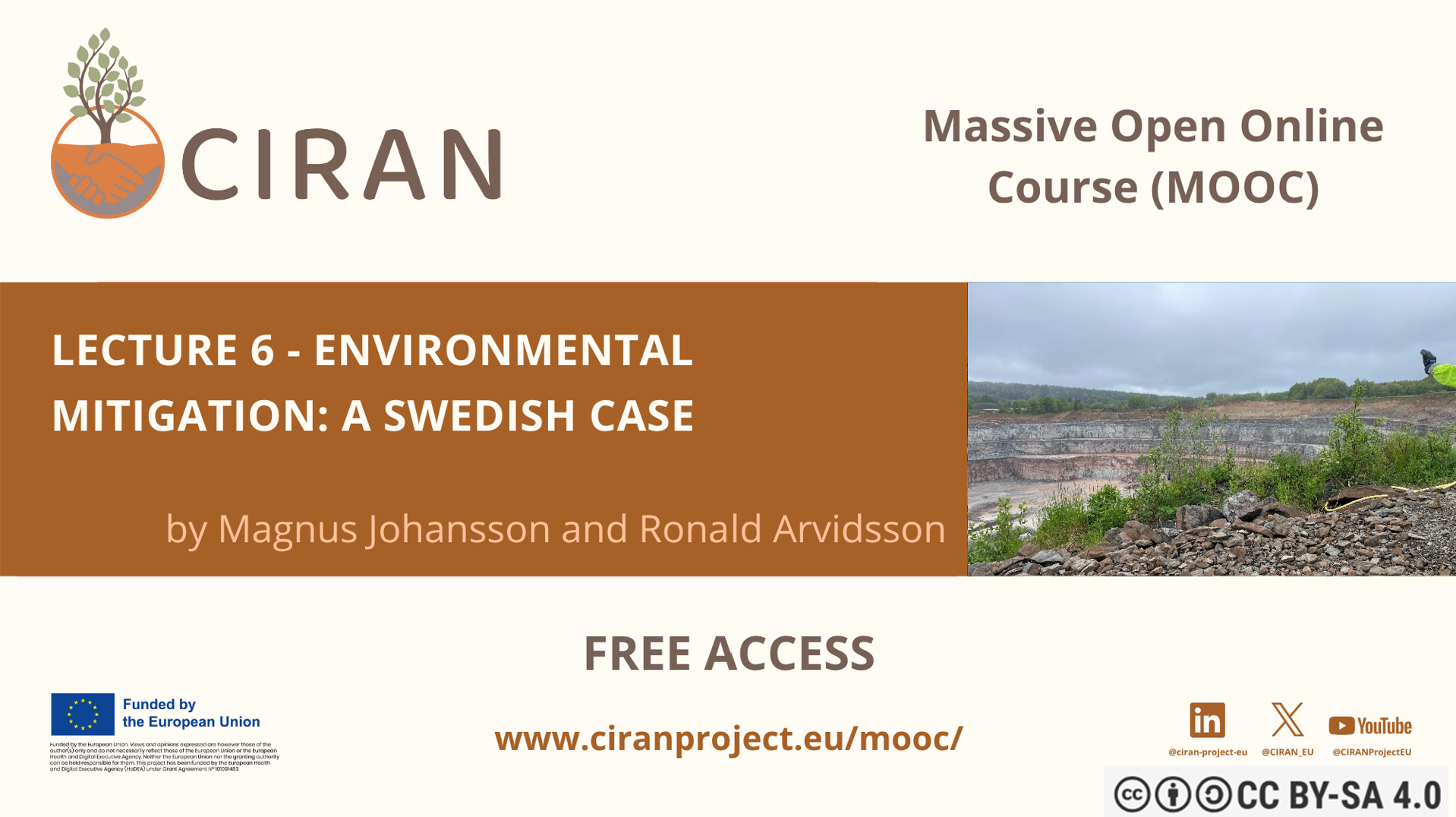
Lecture 6: Swedish quarry case – Mitigation on impacts on nature – by Magnus Johansson
This lecture is delivered by Magnus Johansson (Geological Survey of Sweden, SGU).
Magnus graduated in 2006 with double MSc degrees in Geology and Physical Geography from the University of Hanover, Germany. He has vast professional experience in the private sector, among others in industrial minerals, mining, and environmental consulting. In 2020 he joined the Geological Survey of Sweden where he holds a position as Senior Geologist.
What will you learn in Lecture 6?
- The case of the quarry for cement raw materials in Skövde, Sweden.
- Measures that were necessary to proceed with permitting in such a quarry.
- Compensation measures for infringement of environmental protection regulations in permitted mines in protected areas
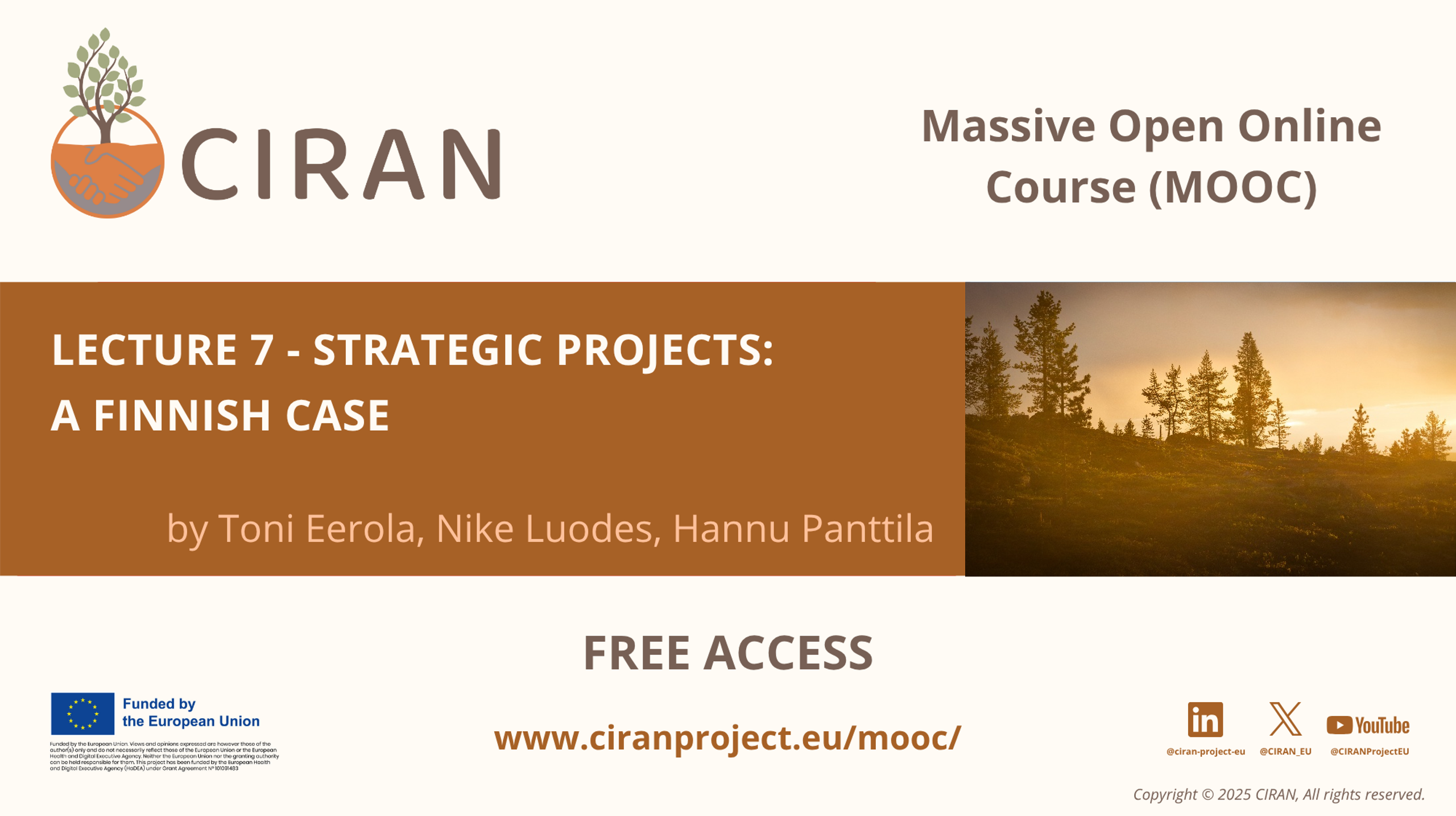
Lecture 7: Solutions adopted in an EU strategic extractive project – The case of Sakatti, Finland – by Toni Eerola, Nike Luodes, Hannu Panttila
This lecture is delivered by three Researchers in the Geological Survey of Finland (GTK): Toni Eerola, Nike Luodes, and Hannu Panttila.
Toni Eerola is a senior specialist at the GTK’s Mineral Economy Solutions Unit, Mineral Intelligence Group. He has over 30 years of professional experience in geology, mineral exploration, and environmental and social governance (ESG), and development issues. He lived 18 years in Brazil, where he worked in several projects of geological mapping, research, mineral exploration, and environment. He is fluent in Portuguese language. He worked also in Mozambique during 2003-2005 in geological mapping in a project lead by the GTK, which was financed by the World Bank and also as a supervisor of mineral exploration in Kingdom of Saudi Arabia.
Nike Luodes holds a background in construction engineering and earned her PhD in Environmental Geoengineering in 2005. Her career has spanned the natural stone and aggregates sector, where she has actively contributed to standardization efforts at both national and European levels, cooperating also in international channels as the Association of Engineering Geology and the Environment (IAEG). Her professional experience includes managing testing laboratory, coordinating development program within a regional development company, and leading research and project coordination at the Geological Survey of Finland (GTK). At GTK, her focus has increasingly turned toward land use and mining-related topics, which she has addressed through several international and EU-funded projects, including Minland, CIRAN, and S34I. More recently, she has expanded her work to include soil pollution, notably within the ISLANDR project.
Hannu Panttila is a researcher at the Geological Survey of Finland (GTK).
What will you learn in Lecture 7?
- About the Sakatti Ni-Cu-PGE-Co mineral deposit in Finland
- The use of innovative techniques for drilling and mining that facilitated the permitting application
- Solutions for mining permitting in a Natura2000 area
- Examples from stakeholder engagement and communication processes, including sponsoring of local culture and sport events and scholarships for mining related studies
Click on the Lectures below to watch them on YouTube:
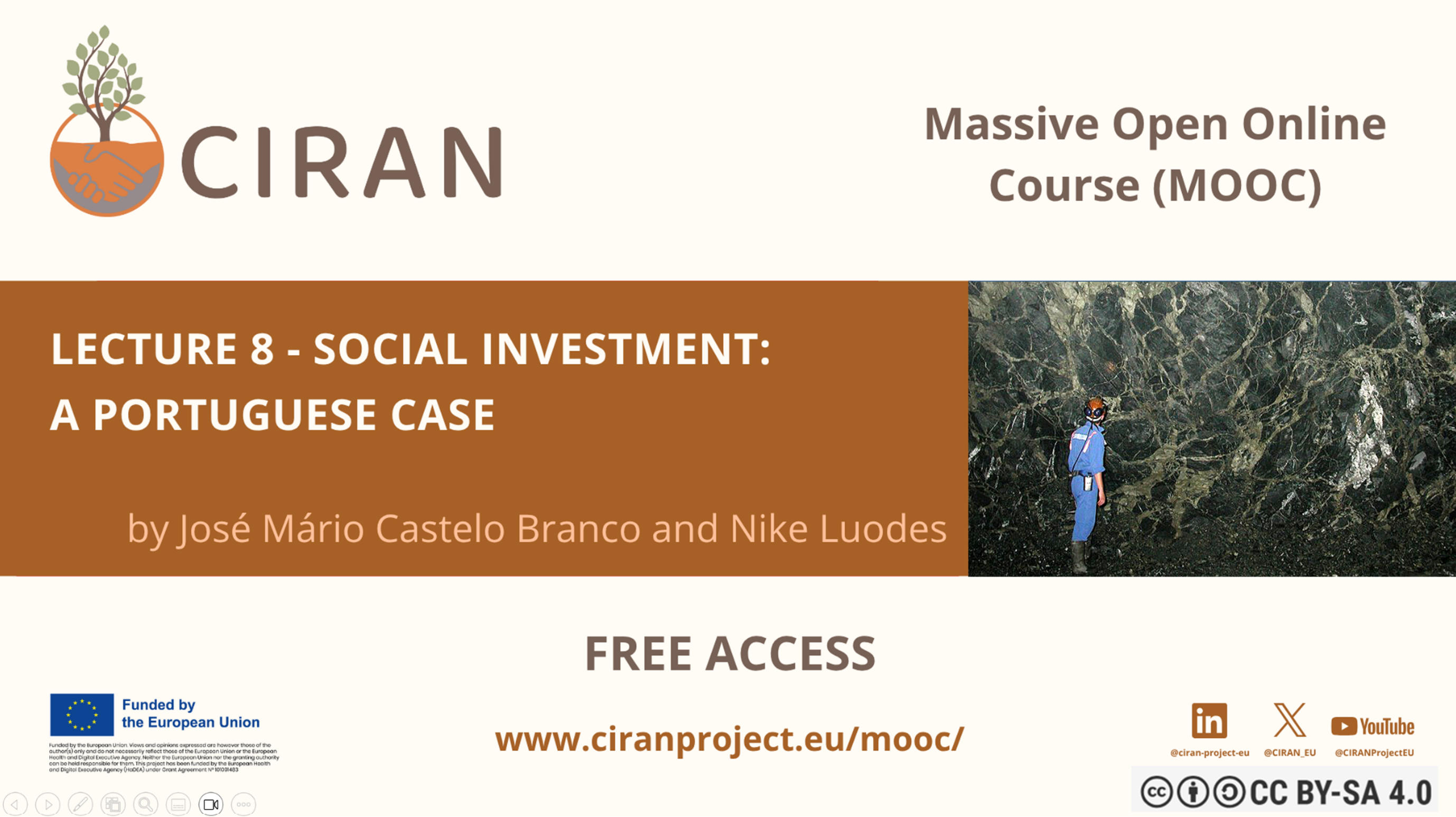
Lecture 8: Innovative techniques and Social investment – The case of Neves Corvo, Portugal – by Nike Luodes & José Mário Castelo Branco
This lecture is delivered by Nike Luodes (GTK) and José Mário Castelo Branco (GGC)
What will you learn in Lecture 8?
- About the Neves Corvo volcano-sedimentary massive sulfides zone in Portugal
- Solutions employed to facilitate permitting
- Technical solutions to decrease surface impact and key measures for monitoring the entire mining ecosystem
- Characteristics in modern mining that reduce the area needed for tailings disposal
- Stakeholder engagement plans and local community investments.
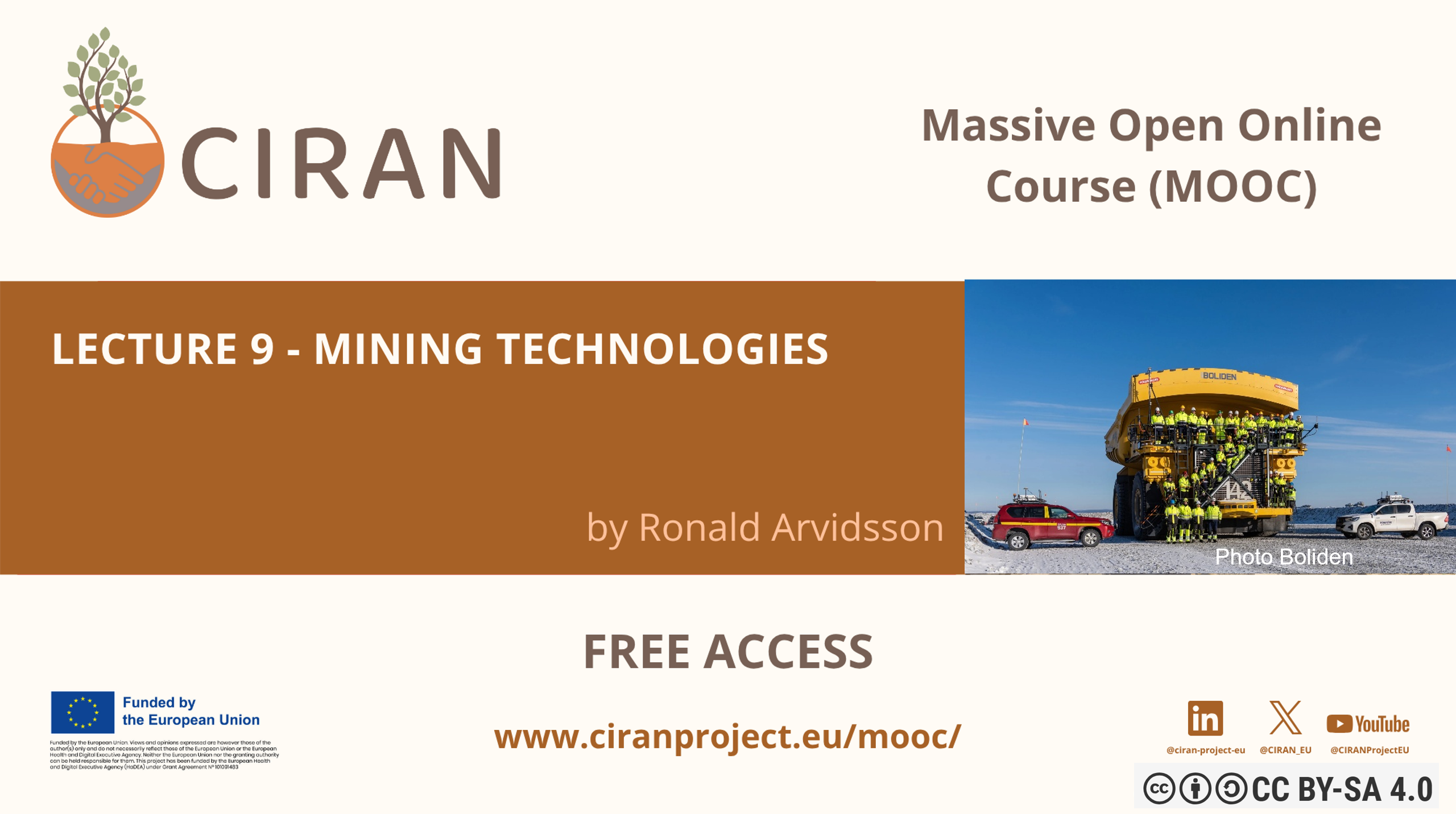
Lecture 9: Innovative mining technologies – by Ronald Arvidsson
This lecture is delivered by Ronald Arvidsson (SGU)
What will you learn in Lecture 9?
- Possible impact of exploration on the surface
- How modern mining technologies have improved the health and safety of miners and a reduced surface impact
- Improved workplace safety in modern underground mining, due to increasing electrification of vehicles in combination with remote operation and monitoring from (surface) control rooms.
Click on the Lectures below to watch them on YouTube:
CIRAN extends its gratitude to the lecturers for sharing their research and for collaborating with the project in the creation of this MOOC.
For more information about the CIRAN project and to stay updated on our progress, please visit our Project & Results pages and Subscribe to our Newsletter.
To stay up to date, follow CIRAN on Social Media!
To engage in meaningful conversations on these and related topics, join the Community of Practice on LinkedIn.